
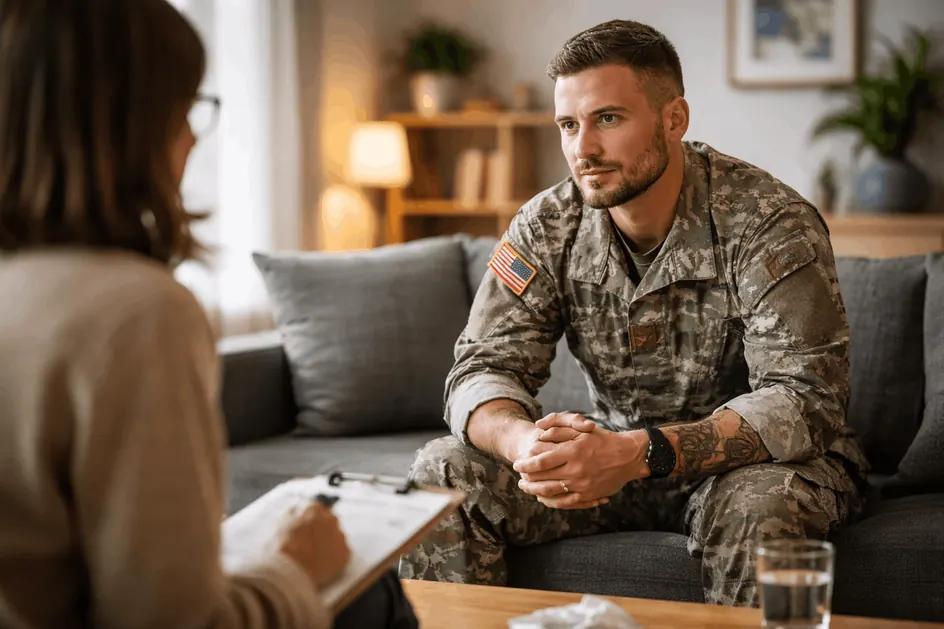
Leaving the military is not just a career change. It is a shift in identity, structure, community, and purpose.
For many veterans, the transition back to civilian life brings unexpected emotional challenges. Even those who appear strong and capable can struggle quietly.
This is where therapy can make a meaningful difference.
The transition is more than logistical
On paper, transitioning out of the military may involve employment, housing, or education decisions. Internally, it can feel much deeper.
The military provides routine, camaraderie, and a clear mission. Civilian life often feels less structured and more ambiguous. That loss of clarity can create frustration, restlessness, or a sense of disconnection.
Therapy offers space to process those changes without judgment.
Processing trauma and high stress experiences
Not all veterans experience combat trauma, but many have lived in prolonged high stress environments.
Exposure to danger, loss, moral injury, or constant alertness can leave the nervous system stuck in survival mode. Symptoms may include irritability, sleep disturbances, hypervigilance, emotional numbness, or difficulty relaxing.
Trauma informed therapy helps veterans understand these responses and gradually retrain the nervous system to feel safe again.
Identity shifts after service
Military service often becomes a central part of identity. When that chapter ends, many veterans ask themselves who they are now.
This identity shift can affect confidence, direction, and self worth. Therapy provides a structured space to redefine purpose and integrate military experience into civilian life in a healthy way.
The goal is not to erase the past, but to build a future that feels meaningful.
Strengthening relationships
Transitioning home also affects spouses, partners, and families. Communication styles that worked in service may not translate easily into home life.
Emotional distance, misunderstandings, or tension can grow without support.
Therapy can help veterans and their families improve communication, rebuild closeness, and navigate change together.
Preventative support before crisis
Many veterans wait until symptoms feel overwhelming before seeking help. Preventative therapy encourages earlier support.
Addressing stress, trauma responses, or identity concerns early often prevents more serious mental health challenges later.
Seeking therapy is not a sign of weakness. It is a step toward long term strength and stability.
Veteran therapy in Ogden and Logan, Utah
Psychological Preventative Health offers compassionate therapy for veterans adjusting to civilian life. Care is focused on trauma informed support, emotional regulation, and building resilience.
If you or someone you love is navigating this transition, support is available.
Call (801) 719-7737 to get a quote and start the next chapter with confidence.